From Data Analyzer to Creative Consultant
How AI is Reshaping the Total Rewards Professional’s Role
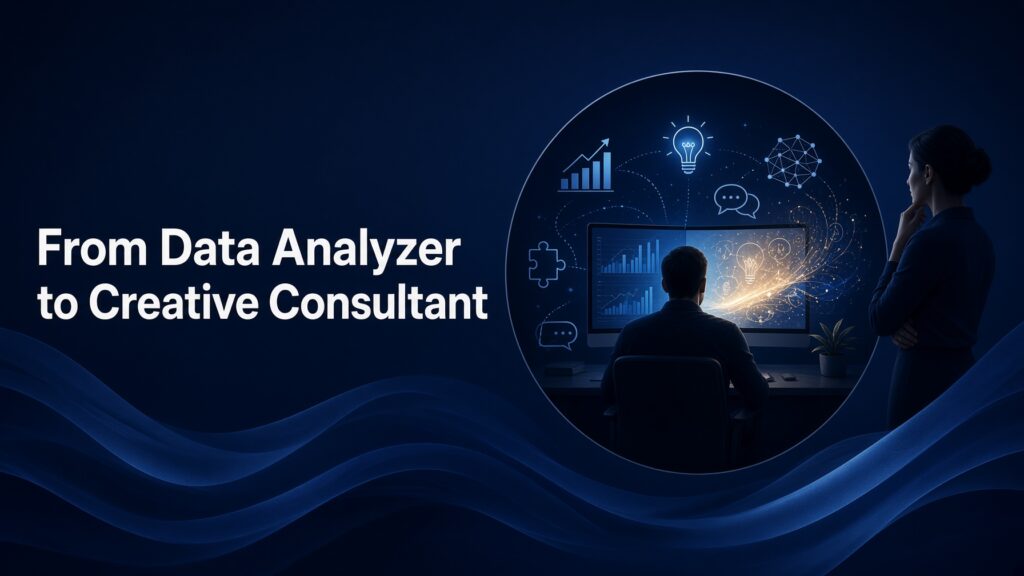
The role of the Total Rewards professional is undergoing a transformation. It’s a shift from the technical – crunching numbers and managing data to the strategic and creative designing compelling employee experiences and shaping business strategy. Artificial Intelligence is the catalyst, turning a long-held vision into a tangible reality.
The Great Unburdening: AI Automates Routine Tasks
For years, Total Rewards teams have been weighed down by manual, repetitive tasks. According to Payscale’s 2026 Compensation Best Practices Report, AI is increasingly relevant to compensation work, including market pricing, benchmarking, job architecture, and compensation operations.[1] These are tasks like market benchmarking, benefits administration, and even creating complex benefits newsletters—tasks that are now being automated.
Organizations are already applying AI to Total Rewards workflows. CHRO Association’s Albemarle case study describes Comp-Pilot as a governed AI agent that automates offer pricing and interprets policy in real time, reducing offer generation from days to minutes and freeing analyst capacity for higher-value work.[2]
This automation frees up significant capacity. In the Albemarle case study, Total Rewards analysts redirected 10% to 20% of their time toward more strategic work after Comp-Pilot automated repeatable compensation logic.[2] More importantly, it creates the space for Total Rewards professionals to move beyond being “data analysers” and focus on higher-value strategic work.
The Evolution: Becoming a Creative, Strategic Consultant
With the manual burden lifted, Total Rewards professionals are evolving into “creative consultative partners”. WorldatWork’s Total Rewards ’26 session on AI highlighted the must-have skills for tomorrow’s HR and Total Rewards teams: data fluency, insight storytelling, and strategic consulting.[3]
The modern Rewards professional is now a strategic advisor, using AI to uncover insights and then applying human creativity to solve problems. WorldatWork reports that strategic alignment of Total Rewards programs with organizational goals is now viewed as the leading driver of reward effectiveness, while technology integration and automation have sharply risen in priority.[4] This is where the value lies: not in generating reports, but in crafting compelling narratives for the C-suite, designing more creative incentive programs, and building a proactive workforce plan.
As the function becomes more strategic, however, its credibility depends on preserving judgment, accountability, and empathy in every AI-enabled process.
The Unshakeable Core: The Human-in-the-Loop
Despite its power, AI is not a replacement for human judgment. The most successful implementations maintain a “human-in-the-loop” process, where AI handles the data and the professional provides oversight, context, and empathy. In the Albemarle example, Comp-Pilot handled repeatable pricing and policy logic while HR and Total Rewards professionals reviewed recommendations, applied judgment, and retained final decision authority.[5] This builds trust and ensures decisions are fair and equitable.
This human element remains critical. Research and practitioner guidance on AI in Total Rewards emphasizes responsible governance, explainability, human validation, and the need to use AI to support—not replace—people-related decisions.[6] The best approach is to treat AI as a powerful partner, not a replacement, augmenting human capabilities in a “head, heart, and hands” collaborative model.
Conclusion
The journey from “data analyzer to creative consultant” is well underway. By embracing AI to automate the routine, Total Rewards professionals are redefining their roles. They are stepping up as true human capital strategists who blend data-driven insights with human creativity and empathy. The future of Total Rewards isn’t about being replaced by technology; it’s about building a future where we lead with technology as our partner, keeping the human core at the center of all we do.
References
1. Payscale, 2026 Compensation Best Practices Report.
2. CHRO Association, AI Case Study Topic: Compensation & Total Rewards.
3. WorldatWork Total Rewards ’26, “Thriving in the Age of AI: Evolving Your HR Team for What’s Next.”
4. WorldatWork, 2026 Total Rewards Leadership Report.
5. CHRO Association, “How Albemarle Built Trust in AI-Assisted Decisions.”
6. HRPA, “The Contribution of AI to Total Rewards.”
Related Articles
-
November 5, 2026
5 Approaches to More Effective Total Rewards Communication
5 Approaches to More Effective Total Rewards Communication Total Rewards communication often falls short of its intended impact. Schaefer [9] reports that only 40% of employees understand their Total Rewards; this figure is cited from professional commentary rather than a verified primary study. Annual statements can provide a backward-looking snapshot rather than guidance on current
-
November 5, 2026
Pay Transparency: Turning Compliance into Competitive Advantage
Pay Transparency: Turning Compliance into Competitive Advantage When the board asks, “What keeps us exposed?” the reflex answer is cyber, regulatory, or geopolitical risk. Pay is rarely on the list until it is a single leaked salary spreadsheet, a candidate who walks away because no range was disclosed, or a gender pay gap figure published
-
November 4, 2026
Your Employees Don’t Understand Their Total Rewards—and It’s Costing You
Your Employees Don’t Understand Their Total Rewards—and It’s Costing You The Communication Paradox: Better Informed, Less Satisfied A counterintuitive trend is emerging in today’s workplaces: employees feel better informed about their benefits than ever, yet satisfaction is declining. WTW’s latest EX Intelligence report found that 84% of employees feel well informed about company benefits, up